

 English
 English
 русский
 Français
 Español
 Português
 عربى
عربى
Cat:Glue -coated Protective Film
● Good weatherability for outdoor exposure; ● Stable adhesion level; ● UV resistance for up to 12 months; ● Can print customized logo or application i...
See Details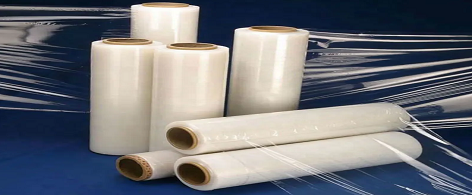
Walking through any industrial warehouse or shipping facility, you will see pallets wrapped in layers of clear plastic film. That film, known as PE stretch film, is one of the most important yet overlooked components of modern logistics. It holds products in place during vibration, prevents shifting during sudden stops, and keeps dust and moisture away from sensitive goods. But walk a little further, and you will notice something interesting. Some pallets are wrapped with very thin film that clings tightly to perfectly stacked boxes. Others are wrapped with thick, heavy-duty film that looks almost like a second skin around irregular loads. The difference between these two pallets is not just a matter of preference. It is a deliberate choice based on dozens of factors including weight, shape, sharpness, transport distance, and budget.
Choosing the right PE stretch film thickness for your load is not as simple as grabbing the thickest roll on the shelf. Using film that is too thin risks product damage, customer returns, and even safety hazards if a pallet collapses during transport. Using film that is too thick wastes money on every single pallet, increases plastic waste, and makes the film harder to apply, especially when wrapping by hand. The ideal thickness is the minimum that reliably secures your specific load under your specific shipping conditions.
PE stretch film, where PE stands for polyethylene, is a highly elastic plastic wrapping material used to secure products onto pallets. It is most commonly made from linear low-density polyethylene, often abbreviated as LLDPE. This material has a unique combination of properties that make it ideal for pallet wrapping. It can stretch to several times its original length without breaking. It clings to itself without adhesive. And it resists tearing even when stretched tightly around sharp corners.
The way stretch film works is deceptively simple. As you pull the film around a pallet, you stretch it. The stretched film constantly tries to return to its original length, creating tension that squeezes the load inward. This compressive force holds individual boxes, bags, or products tightly together so they cannot shift relative to each other. When a truck accelerates, brakes, or turns, the film keeps the entire pallet moving as one solid unit rather than a collection of loose items that could tip or scatter.
Stretch film is different from shrink wrap, a common point of confusion. Shrink wrap requires heat to tighten around a load. Stretch film requires only mechanical stretching. This makes stretch film faster to apply, more energy-efficient, and better suited for irregular loads. For these reasons, stretch film has become the dominant choice for pallet stabilization in warehouses and shipping facilities around the world.
Thickness is the single most important specification of any stretch film because it determines how much force the film can exert and how well it resists damage. Imagine two rubber bands, one thin and one thick. If you stretch both to the same length, the thick one will pull back with much more force. The same principle applies to stretch film. Thicker film, when stretched, generates higher holding force against the load. This means heavier products stay in place, and loads remain stable even during rough transport.
Thickness also directly affects puncture resistance. Loads with sharp edges are the enemy of thin stretch film. A single sharp corner on a metal part or a broken pallet board can poke right through 40-gauge film, creating a tear that quickly runs across the entire wrap. Once that tear reaches the edge of the pallet, the film loses all holding force, and the load can collapse. Thicker film resists punctures much better, and even if a small hole forms, thicker film is far less likely to tear further.
However, thicker is not always better. Thicker film costs more per roll. It is heavier, increasing shipping costs. It generates more plastic waste. And when applied by hand, thick film requires significantly more physical effort to stretch. Many warehouse workers develop repetitive strain injuries from struggling with film that is thicker than necessary. The goal is to use the thinnest film that reliably protects your load, not the thickest film you can find.
Anyone shopping for stretch film quickly encounters a confusing array of measurement units. Suppliers in the United States typically use “gauge.” European and Asian suppliers use “microns.” Industrial engineers might use “mil.” These three units all measure the same thing—thickness—but they use different scales. Understanding the relationships between them is essential for comparing products from different suppliers.
The table below summarizes the three measurement systems and how they relate to each other.
| Measurement Unit | Abbreviation | Equivalent in Other Units | Typical Stretch Film Range | Primary Region of Use |
|---|---|---|---|---|
| Gauge | G or GA | 1 gauge = 0.01 mil = 0.254 microns | 40 to 120 gauge | United States and Canada |
| Mil | mil | 1 mil = 0.001 inch = 100 gauge = 25.4 microns | 0.4 to 1.2 mils | United States (industrial) |
| Micron | µ or µm | 1 micron = 0.001 mm = 3.94 gauge | 10 to 30 microns | Europe, Asia, and most other countries |
To put these numbers in perspective, a standard sheet of printer paper is about 4 mils thick, which equals 400 gauge or 101 microns. The thickest stretch film you will commonly use, 120 gauge, is only 0.0012 inches thick. That is about 30 percent as thick as a piece of paper. Yet this incredibly thin material, when stretched around a pallet, can hold thousands of pounds of cargo in place. That is the power of proper stretch film engineering.
When comparing products from different suppliers, always convert all measurements to a common unit. The easiest approach is to convert everything to gauge if you are in North America, or to microns if you are elsewhere. Remember the conversion: gauge multiplied by 0.254 equals microns. Microns divided by 0.254 equals gauge. For rough mental math, 4 gauge is approximately 1 micron, and 100 gauge is approximately 25 microns.
While stretch film is manufactured in many thicknesses, the industry has standardized around a few common options. Each thickness has a range of applications where it performs well. The table below shows the most common thicknesses and what they are typically used for.
| Thickness in Gauge | Thickness in Microns | Common Name | Typical Applications |
|---|---|---|---|
| 35 to 40 gauge | 9 to 10 microns | Economy / Light-duty | Very light, stable loads; bundling small items together; dust protection only |
| 50 to 55 gauge | 12 to 14 microns | Standard hand-grade | General-purpose hand wrapping; stable loads under 1,000 pounds |
| 60 to 70 gauge | 15 to 18 microns | Mid-grade hand or light machine | Irregular loads; weights from 1,000 to 1,500 pounds |
| 75 to 80 gauge | 19 to 20 microns | Heavy-duty hand or standard machine | Most common industrial thickness; loads up to 2,000 pounds; mixed pallet shapes |
| 90 to 100 gauge | 23 to 25 microns | Extra heavy-duty | Heavy loads from 2,000 to 3,000 pounds; loads with sharp corners; long-distance shipping |
| 110 to 120 gauge | 28 to 30 microns | Maximum strength | Very heavy loads over 3,000 pounds; exposed sharp metal edges; high-vibration transport |
A 50-gauge film is perfectly adequate for many warehouse applications. It provides enough holding force for stable, uniform loads under 1,000 pounds. It is easy to stretch by hand, and it costs significantly less than heavier films. However, the same 50-gauge film would be a poor choice for a pallet of canned goods with sharp lid edges, or for a 2,500-pound load of machinery parts. Those applications require 80-gauge or thicker film.
One important note about pre-stretched film. Pre-stretched film is manufactured with the stretch already applied. It is thinner than standard film of the same gauge rating because it has already been elongated. However, because the stretch has already been done mechanically during manufacturing, pre-stretched film requires much less force to apply by hand. When comparing pre-stretched film to standard film, you should compare the final wrapped thickness, not the original gauge. Most reputable suppliers provide both numbers on their product specifications.
The weight of your load is the most important factor in determining the required stretch film thickness. Heavier loads generate more force during transport. When a truck brakes suddenly, a 2,000-pound pallet wants to keep moving forward with 2,000 pounds of force. The stretch film must provide enough counterforce to keep that pallet in place. If the film is too thin, the load will shift forward, potentially crushing items at the front of the pallet or tipping over entirely.
The relationship between weight and required thickness is not perfectly linear. A load that is twice as heavy does not necessarily require twice the thickness. However, as a general starting point, the following guidelines apply.
Loads under 500 pounds. For very light loads, 35 to 50 gauge film is usually sufficient, provided the load is stable and has no sharp edges. Examples include empty cardboard boxes, bags of lightweight insulation, or pallets of foam products. These loads generate little inertial force, so even a thin film can hold them in place.
Loads between 500 and 1,000 pounds. This is the range where 50 to 60 gauge film performs well. Most consumer goods in uniform boxes fall into this category. Cases of bottled water, stacked cartons of office supplies, and pallets of bagged pet food are typical examples. The film must provide moderate holding force, but the loads are generally stable and easy to wrap.
Loads between 1,000 and 1,800 pounds. For these heavier loads, 60 to 80 gauge film is recommended. At these weights, the forces during transport become significant. A 1,500-pound load shifting forward during hard braking can easily overcome thin film. The extra thickness provides the necessary holding margin.
Loads between 1,800 and 2,500 pounds. These heavy loads require 80 to 100 gauge film. At this weight range, load stability becomes critical. Even a small amount of shifting can cause the entire pallet to become unstable. The thicker film provides both higher holding force and better puncture resistance.
Loads over 2,500 pounds. For the heaviest loads, 100 to 120 gauge film is typically required. Alternatively, you may use a thinner film but apply multiple layers. Some warehouses use two complete wraps of 60-gauge film instead of one wrap of 120-gauge film. This approach can actually provide better protection because the two layers can shift independently, but it uses more film and takes longer to apply.
The shape of your load has a major impact on how stretch film interacts with it. Loads with smooth, flat surfaces are easy to wrap because the film makes continuous contact across large areas. Loads with irregular shapes or sharp edges present significant challenges.
Uniform stable loads are the easiest to wrap. These loads consist of products stacked in neat columns with flat surfaces facing outward. Cardboard boxes, plastic totes, and bags of granular products all fall into this category when stacked properly. The film can lie flat against the load, distributing holding force evenly. For these loads, you can generally use the lower end of the thickness range for your weight category.
Irregular loads have varying heights, protruding items, or uneven surfaces. Examples include mixed carton sizes stacked on the same pallet, machinery parts in individual boxes of different heights, or pallets where some items extend beyond the pallet edge. For these loads, the film must bridge gaps and conform to different shapes. This puts more stress on the film, especially at the points where it spans across gaps. Medium thickness of 60 to 80 gauge is typically required to provide enough strength without tearing.
Loads with sharp edges or corners are the most demanding. A single sharp corner can act like a knife, slicing through thin film as soon as tension is applied. Common examples include metal parts with exposed edges, lumber with rough-cut ends, pallets of canned goods where the can lids create sharp rings, and any load that has broken pallet boards with splintered wood. For these loads, you need at least 80 gauge film, and often 100 to 120 gauge. Even then, you should also use cardboard or plastic corner protectors to distribute the film’s tension over a wider area.
Taller loads create additional challenges for stretch film. The issue is leverage. A tall load can pivot from its base much more easily than a short load. The film wraps around the bottom of the pallet must resist not just the weight of the load but also the torque created by the load’s height.
Consider two pallets, both weighing 1,000 pounds. One is 3 feet tall. The other is 6 feet tall. During a sudden stop, the 6-foot-tall pallet exerts twice the leverage force on the bottom wraps compared to the 3-foot pallet. This means the bottom wraps of the tall pallet must provide twice the holding force to prevent tipping. If the film is too thin, the bottom wraps will stretch excessively, allowing the load to lean.
For loads over 5 feet tall, you have two options. The first option is to use a thicker film, adding 10 to 20 gauge to your normal selection. This increases the holding force of every wrap. The second option is to use a standard thickness but apply additional wraps around the top and bottom of the load. Most industry experts recommend both approaches. Use thicker film for tall loads, and add extra wraps at the top and bottom. The bottom wraps resist the leverage force. The top wraps prevent the individual top boxes from shifting independently.
Your wrap pattern also matters. A proper wrap pattern starts with two to three wraps around the bottom of the pallet, cinching the film tight against the pallet itself. Then spiral upward with 50 percent overlap, meaning each layer covers half of the previous layer. End with two to three wraps around the top. For tall or unstable loads, add a second spiral pass, or add extra wraps around the middle where the load is widest.
How far will your pallet travel, and under what conditions? A pallet moved by forklift from the packaging line to a storage rack in the same warehouse needs very little protection. A pallet shipped across the country by truck, transferred to another truck, then delivered to a customer needs significant protection. And a pallet shipped internationally by ocean freight, then by rail, then by truck needs maximum protection.
The table below provides general guidelines for adjusting thickness based on transport distance and conditions.
| Transport Scenario | Recommended Thickness Adjustment | Additional Precautions |
|---|---|---|
| Same-building movement only | Minimum thickness for weight | None needed |
| Local delivery under 100 miles | Standard thickness | Standard wrap pattern |
| Regional LTL shipping from 100 to 500 miles | Add 10 to 15 gauge to standard | Use 50 percent overlap |
| Long-haul trucking over 500 miles | Add 20 to 30 gauge to standard | Add extra top and bottom wraps |
| Intermodal (truck plus rail plus truck) | Maximum thickness or double-wrap | Use corner protectors on all edges |
| International ocean freight | Maximum thickness | Corner protectors plus plastic strapping |
Long-haul trucking is particularly demanding on stretch film. The constant vibration of the truck traveling down the highway can slowly work the film loose. Each small bump causes the film to stretch and relax slightly. Over hundreds of miles, this cyclic loading can cause the film to lose tension. Thicker film resists this fatigue better than thin film. Additionally, the temperature changes inside a truck trailer can affect film performance. Cold temperatures make stretch film less elastic and more prone to tearing. If your products ship during winter months or to cold climates, consider using a slightly thicker film or a film specifically formulated for low-temperature performance.
Thin stretch film in the 35 to 50 gauge range is appropriate only for very specific situations. It is economical and easy to apply, but it offers limited protection. Before using thin film, be certain that your application does not require the strength of heavier film.
Suitable loads for thin film include empty cardboard boxes that are being moved from a packaging line to a baler. The boxes are light, compressible, and not valuable. Thin film keeps them from scattering during the short forklift ride. Another suitable application is bundling multiple small items together for internal movement. For example, bundling packs of paper towels before they are loaded into a larger shipping carton. Thin film is also appropriate for wrapping individual items for dust protection only, where the film is not expected to provide structural stability.
Thin film is not suitable for any load over 500 pounds. It is not suitable for loads with sharp edges. It is not suitable for loads being shipped by common carrier where the pallet will be handled by multiple people. And it is not suitable for pallets that will be stacked on top of each other. In all of these cases, thin film will likely fail, leading to damaged products and unhappy customers.
This thickness range is the most common choice for warehouses that wrap pallets by hand. It offers an excellent balance of cost and performance for typical loads. A 55-gauge film is easy to stretch, provides good holding force, and resists moderate punctures.
Suitable loads include stable pallets of boxed goods up to 1,000 pounds. Consumer products in uniform packaging, such as cases of bottled beverages or cartons of household goods, are ideal for this thickness. Pallets that are moved within a warehouse or delivered locally on the same truck also perform well with 50 to 65 gauge film. Loads without sharp corners are preferred.
For this thickness range, the recommended wrap pattern is two to three bottom wraps, spiral upward with 50 percent overlap, then two to three top wraps. For loads approaching 1,000 pounds, double-wrap the bottom third of the pallet. The bottom wraps do most of the work in resisting shifting, so reinforcing them provides significant benefit with minimal extra film usage.
This thickness range is the workhorse of industrial packaging. It provides excellent puncture resistance and holding force. Many warehouses use 75 or 80 gauge as their standard film, using thinner film only for very light loads and thicker film only for very heavy or sharp loads.
Suitable loads include mixed pallets with varying box sizes. When boxes do not stack perfectly, the film must bridge gaps and conform to different heights. Seventy to eighty-five gauge film has enough strength to span gaps without tearing. Loads up to 2,000 pounds are appropriate for this thickness. Pallets with some sharp edges can be wrapped successfully if corner protectors are used on the worst edges. Long-haul truck shipping is well within the capability of this thickness range. Loads that will be stacked two high in storage also perform well.
For this thickness range, always use 50 percent overlap. Apply three to four bottom wraps for heavy loads. For loads with sharp corners, apply a band of six to eight wraps directly around the corners before spiral wrapping the rest of the load. This technique, called corner banding, provides extra protection at the most vulnerable points.
These thick films are for demanding applications where load failure is not an option. They are more expensive and harder to apply, but they provide the maximum possible protection from stretch film alone.
Suitable loads include heavy machinery or metal parts where individual components can weigh hundreds of pounds. Loads over 2,500 pounds require the holding force that only thick film can provide. Pallets with exposed sharp edges such as metal corners, rough lumber, or broken pallet boards are prime candidates for thick film. High-vibration transport environments including rail transport or poorly maintained roads demand thick film. International shipping, where pallets may be handled by multiple carriers and stacked under unknown conditions, also requires maximum protection. Loads that will be stacked three high or more in storage benefit from the extra holding force.
For this thickness range, use maximum wrap tension. Machine wrapping is strongly recommended because hand wrapping 100-gauge film is physically demanding and can lead to inconsistent tension. Apply five to six bottom wraps. Use corner protectors on every sharp edge. For extremely heavy or dangerous loads, combine stretch film with plastic strapping. The strapping provides backup holding force if the film is damaged during handling.
At first glance, it seems obvious that thicker film costs more per roll. A 100-gauge roll typically costs 50 to 100 percent more than a 50-gauge roll of the same dimensions. However, the cost per wrapped pallet is not as simple as comparing roll prices. The reason is stretch percentage.
Thicker film can be stretched further without breaking. A high-quality 50-gauge film might be stretched 150 percent, meaning one foot of film becomes two and a half feet of wrapped coverage. A 100-gauge film of similar quality might be stretched 250 percent, meaning one foot of film becomes three and a half feet of wrapped coverage. The thicker film, despite costing more per roll, may actually wrap more pallets per roll.
This is why you should always calculate cost per wrapped pallet, not cost per roll. To do this accurately, you need four pieces of information. First, the cost of the roll. Second, the number of linear feet in the roll. Third, the maximum stretch percentage for that film, which the manufacturer provides. Fourth, how many linear feet of wrapped film you use per pallet, based on your pallet dimensions and wrap pattern.
While it is tempting to simply buy the thickest film available just to be safe, this approach wastes money and material. For every pallet that truly requires 100-gauge film, there may be ten pallets in your facility that could be wrapped with 60-gauge film. Using 100-gauge on those lighter loads is like using a sledgehammer to drive a finishing nail.
Consider using a dual-thickness inventory system. Stock one thinner grade, 50 to 60 gauge, for light and stable loads. Stock one thicker grade, 80 to 90 gauge, for heavy or irregular loads. Train your wrappers to select the appropriate film for each load. Many warehouses find that 70 percent of their pallets can use the thinner grade, saving significant money over time. The investment in training and inventory management pays for itself quickly.
Q1: Is higher gauge always better for PE stretch film?
No. Higher gauge, meaning thicker film, provides more holding force and puncture resistance. But it also costs more and can be harder to apply manually. For many light or stable loads, thin film is perfectly adequate. The best gauge is the minimum that reliably secures your specific load under your specific shipping conditions.
Q2: What thickness of stretch film do I need for wrapping pallets by hand?
For most hand-wrapped pallets under 1,000 pounds, 50 to 60 gauge is sufficient. For loads up to 1,500 pounds with moderate irregularities, 70 to 80 gauge is recommended. For heavy or sharp loads, use 80 to 100 gauge or add corner protectors.
Q3: Can I use 50-gauge stretch film for heavy pallets if I just use more wraps?
Sometimes, but it is not ideal. Adding more wraps of thin film can compensate for lower thickness to some degree. However, thin film still has lower puncture resistance. If your load has sharp edges, extra wraps will not prevent punctures. For heavy but smooth loads, you can use 50 to 60 gauge film with four to five bottom wraps instead of 80-gauge film with two to three bottom wraps. Test this approach with your specific load before committing.
Q4: What is the difference between 80 gauge and 120 gauge stretch film?
The difference is 40 gauge, which equals 0.0004 inches or about 10 microns. In practical terms, 120-gauge film has approximately 50 percent more holding force and significantly higher puncture resistance than 80-gauge film. It is also harder to stretch by hand and costs significantly more per roll. Use 120 gauge only for very heavy loads over 2,500 pounds, loads with exposed sharp metal edges, or high-vibration shipping environments.
Q5: How do microns compare to gauge for stretch film thickness?
Microns and gauge are different units measuring the same thing. To convert gauge to microns, multiply gauge by 0.254. For example, 80 gauge times 0.254 equals 20.3 microns. To convert microns to gauge, divide microns by 0.254. For example, 20 microns divided by 0.254 equals 78.7 gauge.
Q6: Does stretch film thickness affect how much it can stretch?
Yes, generally. High-quality LLDPE stretch film in the 50 to 80 gauge range can typically stretch 200 to 300 percent. Thinner film under 40 gauge may tear before reaching these stretch levels. Thicker film over 100 gauge requires more force to stretch and may only achieve 150 to 200 percent stretch with hand wrapping, though machine wrapping can achieve higher percentages.
Q7: Can I use the same thickness of stretch film for all my pallets?
You can, but it is rarely cost-effective. If you standardize on a medium thickness such as 70 gauge, you will over-package your light loads and under-package your heavy or sharp loads. Most medium-volume warehouses benefit from stocking two thicknesses, one for light and stable loads and one for heavy and irregular loads.
Q8: How do I know if my stretch film is thick enough?
Perform a simple test. Wrap a pallet using your normal procedure. After wrapping, push on the sides of the load. Does the film feel tight, or does the load shift under hand pressure? Next, try to poke a finger through the film at the sharpest corner of the load. If you can easily puncture it with your finger, the film is too thin for that application. For a more rigorous test, ship a test pallet and inspect it upon arrival for any loosening or shifting.
Q9: What is the thinnest stretch film available?
Specialty stretch films can be as thin as 20 to 30 gauge, which equals 5 to 8 microns. These are used only for very light bundling or dust protection, not for pallet stabilization. For actual pallet wrapping, 35 to 40 gauge is generally the thinnest recommended.
Q10: Does pre-stretched film have a different thickness recommendation?
Yes. Pre-stretched film is thinner than standard film of the same gauge because the stretch has already been applied. When comparing pre-stretched to standard film, you should compare the final wrapped thickness. For example, a pre-stretched film that starts at 80 gauge and is stretched 200 percent during manufacturing becomes approximately 27 gauge in its wrapped state. Many suppliers provide both the original and final thickness specifications. Follow the manufacturer’s recommendations for equivalent performance to standard film.
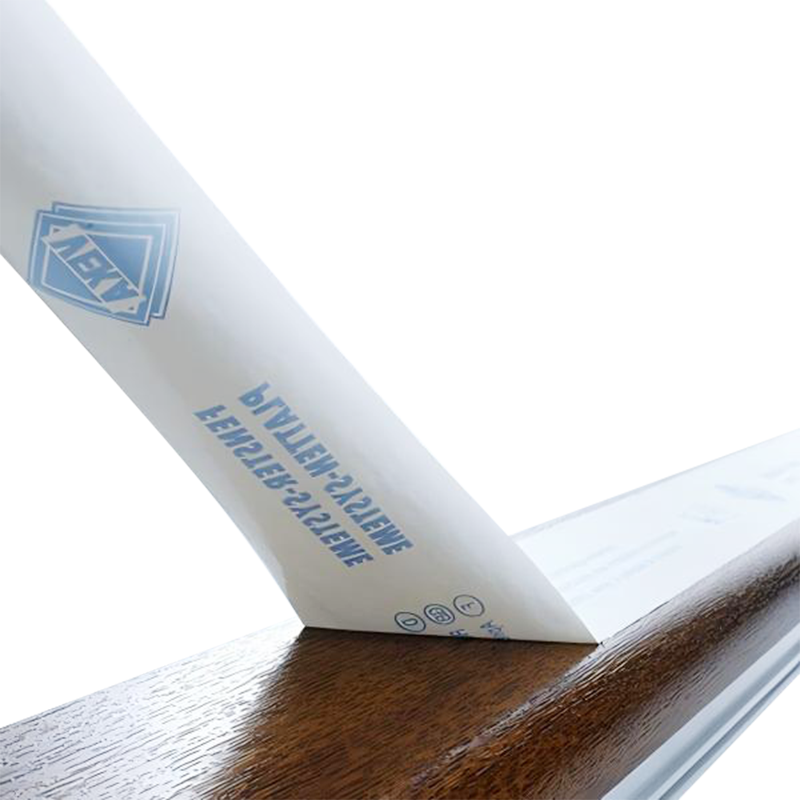
● Good weatherability for outdoor exposure; ● Stable adhesion level; ● UV resistance for up to 12 months; ● Can print customized logo or application i...
See Details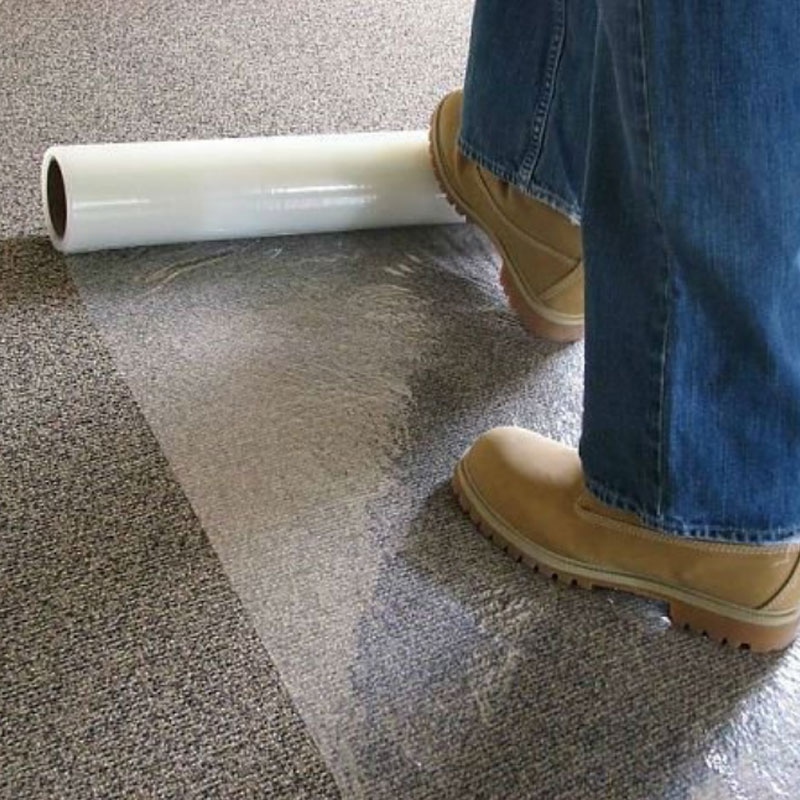
● Protects carpet against staining, paint spillage and dirt during painting, building, remodeling, plastering, tiling, decoration, general maintenance...
See Details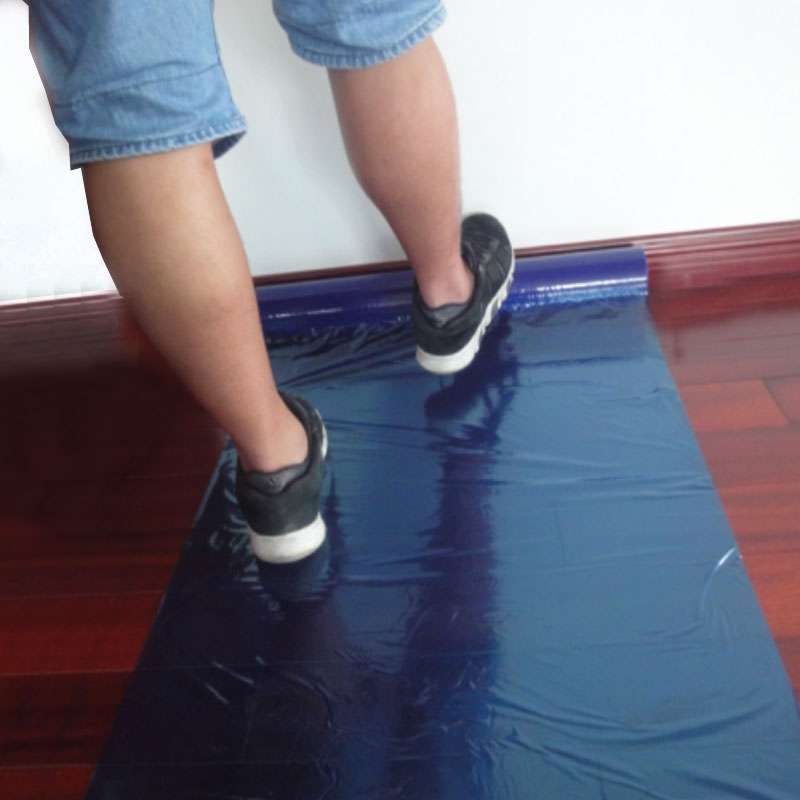
● Patented adhesive formula suits all hard surfaces such as hardwood floors, laminate floors, ceramic, marble, tile, granite, vinyl, worktops, and gla...
See Details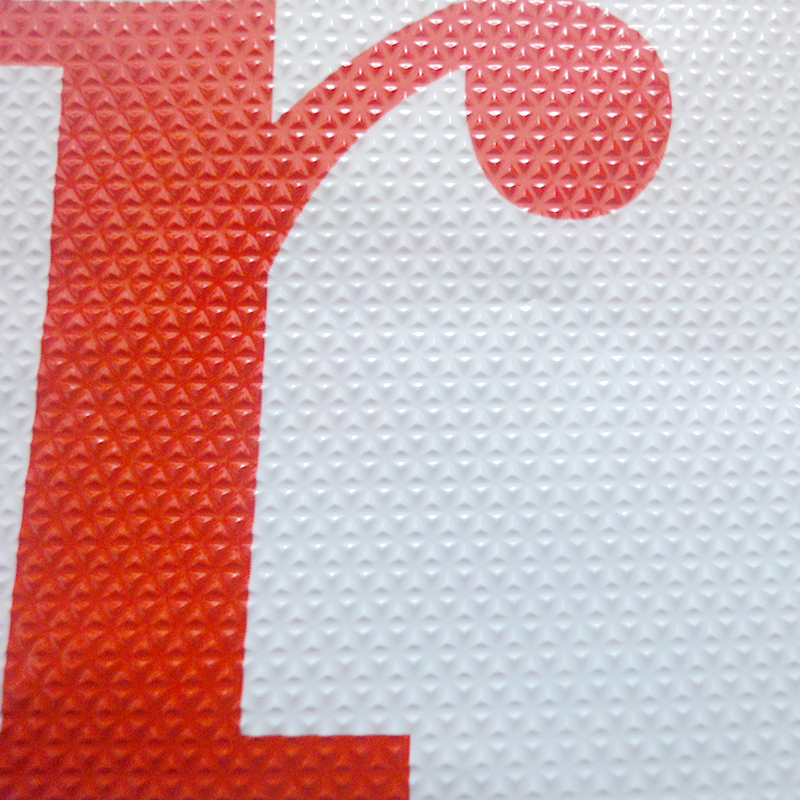
● Anti-slip; ● Embossed film surface to guarantee trip safety;● Tough puncture-resistant polyethylene film;● Can be coated with or without adhesive;● ...
See Details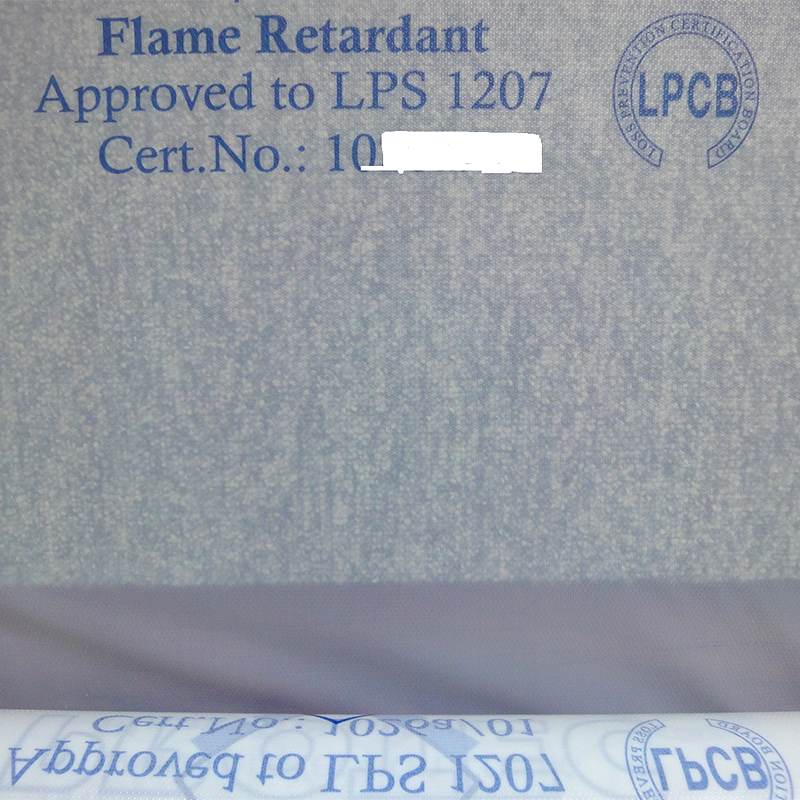
● Prevents costly damages in case of fire /flame;● Meet the strict international test standards of loss prevention; ● Extensive selection for flame re...
See Details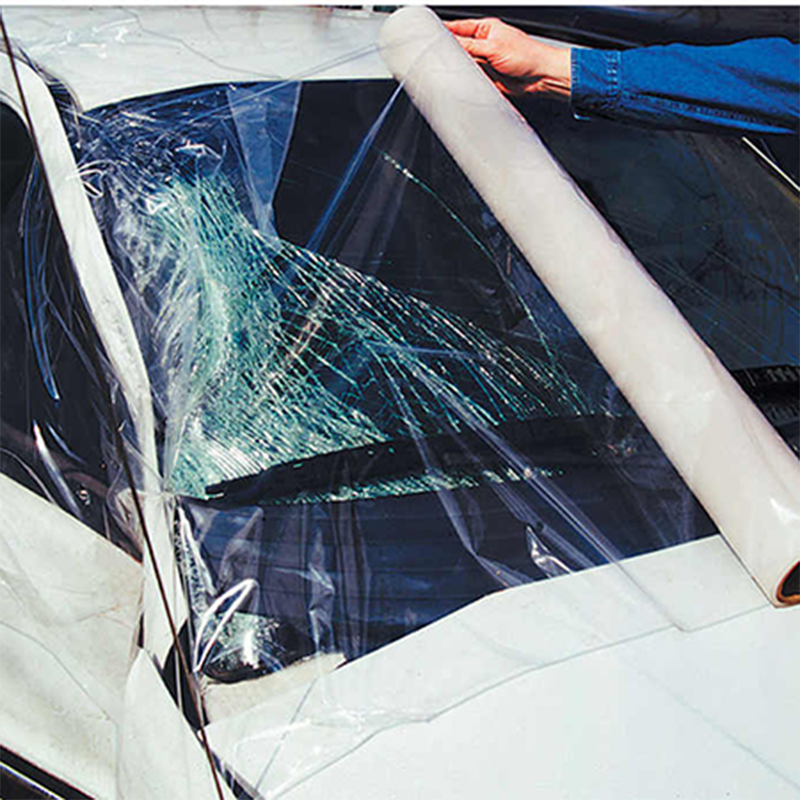
● The super-tough polyethylene film resists puncture and penetration by rain, snow, debris, and dirt during the transportation and storage of the cras...
See Details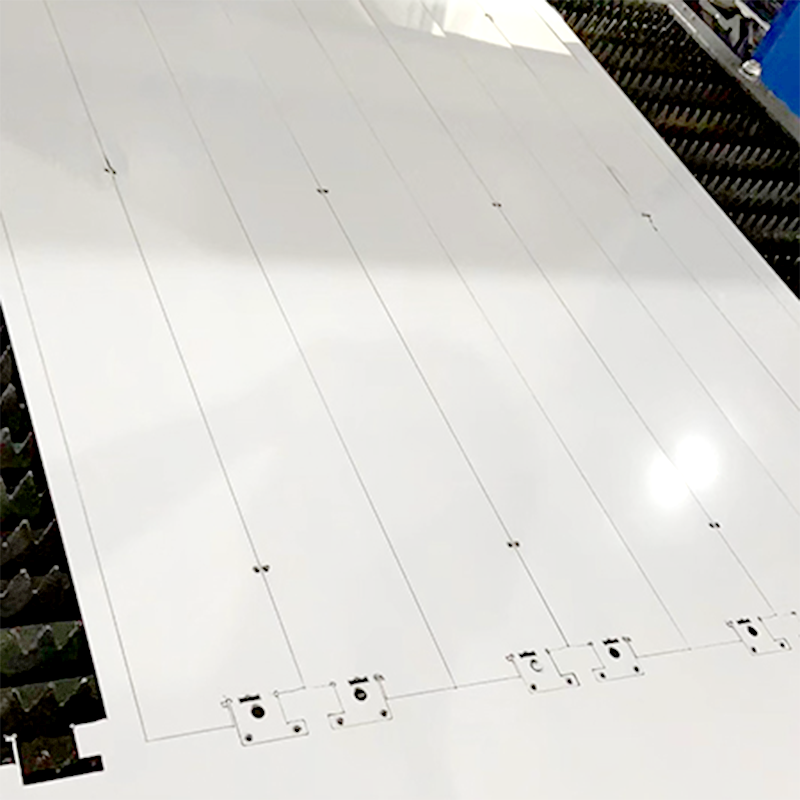
● The specially formulated natural rubber adhesive suitable for both CO2 and Fiber laser cutting processes;● High cutting quality without burr or trac...
See Details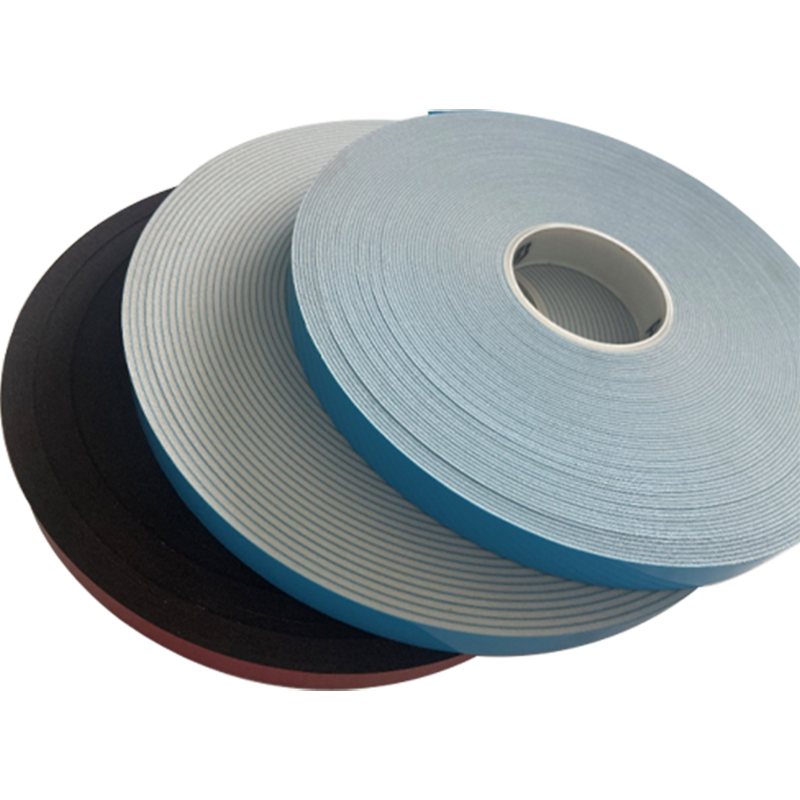
● Waterproof - the desirable material for waterproofing. ● Dust-proof - positive performance of dust prevention.● Low resilience - prevent the deforma...
See Details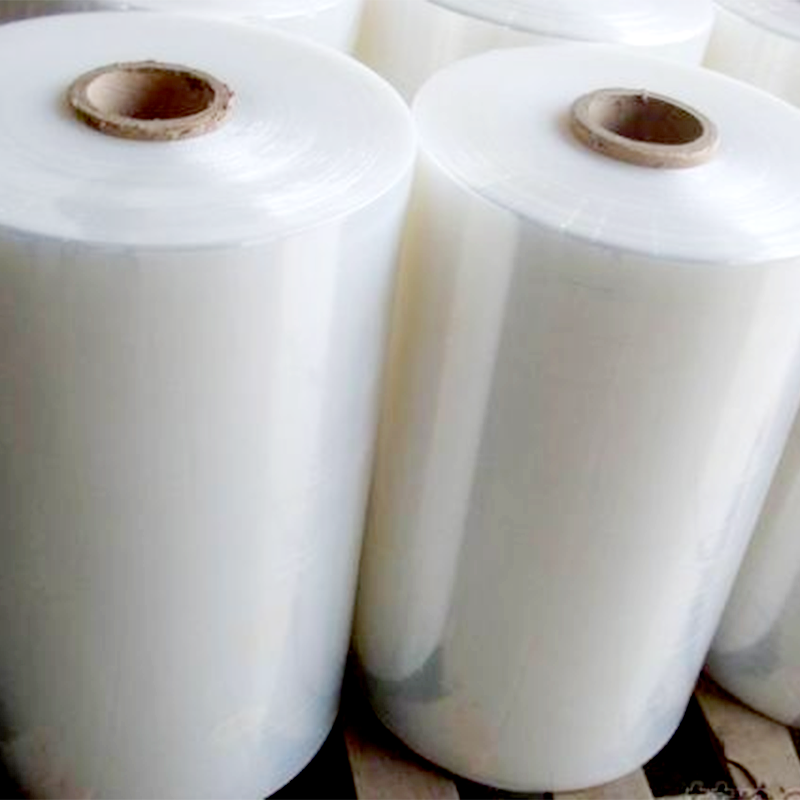
● Excellent puncture and tear resistance; ● Self-adhering-each layer of film bonds to the next for added strength; ● Big roll size to save cost and re...
See Details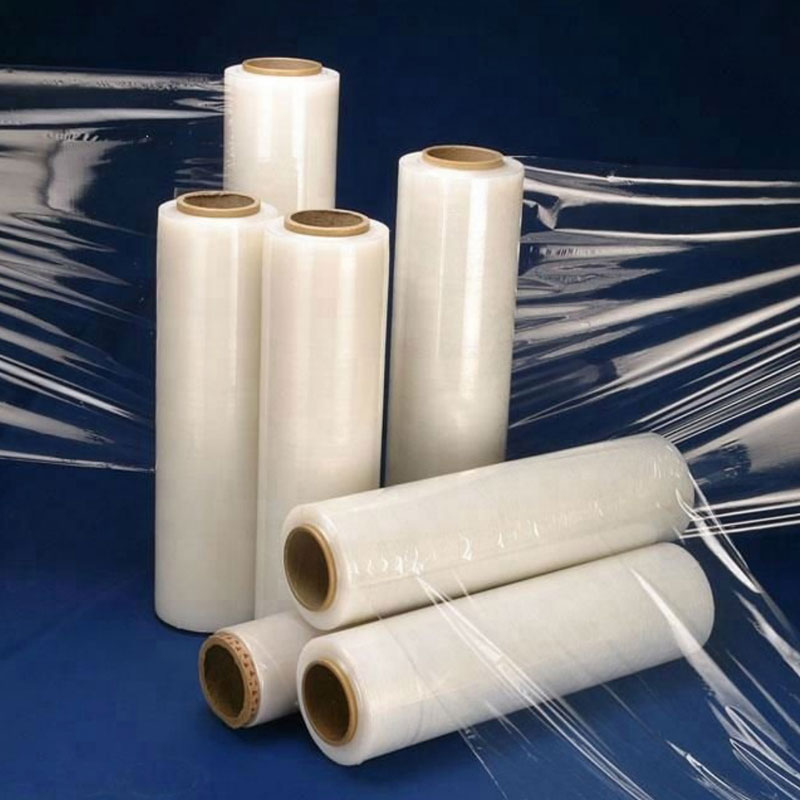
● Small roll size for convenient manual application;● Excellent puncture and tear resistance ; ● A self-adhering-each layer of film bonds to the next ...
See DetailsWe’re a reliable partner that shapes our expertise into success for your project.

Copyright 2024 Wuxi Qida Tape Co., Ltd. All Rights Reserved
 Wholesale Protective Film/Foil Manufacturers
Privacy
Wholesale Protective Film/Foil Manufacturers
Privacy